Saturday, July 3, 2021

The Third Dimension


Have you heard of the “Third Dimension”? 

I was introduced to this concept during a session with the renowned Bharatanatyam dancer Ms. Ananda Shankar. 

A Third Dimension is our calling. It is an activity or passion in which we can immerse ourselves. It is something in which we can lose ourselves while discovering ourselves…. It is our superpower and the secret sauce that makes each of us unique! It is also our alternate identity beyond our professional avatar. 


Head to this link and watch the Ted Talk by Vaishali Kasture, a well known runner where she speaks about the Third Dimension and the importance of discovering and nurturing it.


As young adults, most of us have multi-dimensional personalities which often become two-dimensional as age and responsibilities increase.  Like force-fitting a round peg in a square hole, our colourful multi-dimensional personalities are force-fitted into two-dimensional personalities focussed on work and family. There are of course  people who fuel their passions and keep it alive even as responsibilities increase. It is obviously not a walk in the park and requires grit, gumption, guts and discipline to keep the flame burning bright. 


One such person who immersed herself in her Third Dimension is Ms. Ananda Shankar. 

A renowned dancer, choreographer, scholar and bureaucrat, Ms. Shankar has several feathers in her cap including being the recipient of the Padma Shri award for her contribution to arts. Ms. Shankar was a dedicated student of dance at Kalakshetra and then went on to pursue her career as a bureaucrat in the Indian Railways. She was the first female officer in South Central Railways. Her passion and profession were like railway tracks parallel at times and merging at others. 

Her Ted Talk, “Fighting Cancer with Dance” is ranked among the top twelve Incredible Ted Talks on cancer. Ms. Shankar narrates her story of  how she navigated a harrowing phase when she was diagnosed with cancer. She used her Third Dimension as the guiding light that led her out of a tunnel where she was engulfed by the darkness of cancer. She danced with cancer, through cancer and out of cancer. Her fight against this deadly disease was a tough challenge that she navigated with dance.


The Third Dimension is a passion that can ignite the mind and relieve the monotony and stress of life. My Third Dimension is creating and experimenting with art, writing and photography. Over the past decade, a demanding job, motherhood and the ever increasing Bengaluru traffic left me with little time or mind space to pursue my passions. When the pandemic hit us, I embraced my Third Dimension to break the monotony of the stay-at-home life. During the pandemic I consciously carved out time to get my creative juices flowing again. I pampered myself with art supplies, experimented with new art forms and got my friends into painting as well! I began writing again, after almost a decade. I am co-authoring a children’s book along with my husband. Yes, it is our little family project! Just like you can’t forget swimming or cycling once you learn it, your Third Dimension internalizes itself within you. There are times when it is dormant, but the moment you ignite the flame it burns bright again! 


Our minds are strengthened by learning. In the recent past I have rekindled my passion for creation. I have embraced my Third Dimension and used it to navigate life’s rocky roads. Have you discovered your Third Dimension yet?


Sunday, June 13, 2021

His Story, His Pride

 The saying goes that people come into your life for a reason, a season or a lifetime.  This is a tribute to a special person who came into my life for a reason and hopefully stays for a lifetime! 

The typical course for an individual chartered by society is to study, earn well and "settle down" - get married, have kids, raise kids and the story goes on. It is not easy to take a detour from this course and it takes a lot of courage to do so.  This post is about a dear friend - Anand, who has the courage to be true to himself. He has been my window into the queer world. Anand's life experiences have been challenging, but he has emerged stronger, taller and wiser from it. He has helped and continues to help so many people from the LGBTQ community.

It takes courage to be true, it takes courage to be you. Proud of you Anand!  


Growing up, my introduction to the LGBT community was when I saw transgenders at traffic signals and on trains. There was a sense of anxiety as they came close. As I grew up, my awareness increased and the anxiety turned into a desire to know more and to do my bit for the transgender community. 

Thanks to my workplace, my exposure to the LGBTQ+ expanded through various programs. I learnt about LQBTQ+ community and the importance of being an ally. It was at a session at work where I met Anand. My daughter, Disha was 2 years old then. I attended the session to learn about the LGBTQ+ community.  As a parent, I thought this was more important than ever before to increase my awareness of the LGBT community, to be able to support my child should she ever need help. Anand comes from a well read South Indian family. After his elder sister got married, the “line was cleared” for him to take the plunge. That was the time when he decided to come out to his closest quarters, his parents. He is blessed to have supportive parents. Over the years, he has come out to his extended family, friends and colleagues. While Anand is lucky to have parents who have accepted him, it hasn’t been an easy ride. 

The first thing that most members of the LGBTQ+ members lose when they come out is the support of their family. 

If coming out to oneself and understanding one’s body is difficult, coming out to parents and family can be an even tougher concoction of emotions - relief, pain, happiness, sadness and more. Anand’s story of coming  to his parents is heartwarming. Anand’s sister was getting married and his mom was very excited about shopping for her daughter’s wedding. As she bought jewellery for her daughter, she also brought jewellery for her daughter-in-law to be. As Anand saw all this unfold, he was cringing within feeling terrible about not opening up to his parents about a big part of himself. This was followed by a series of events including a wedding proposal and the untimely demise of a friend’s mom. His friend lost his mom and it plunged him into deep sorrow that he could not come out to his mom during her lifetime and this would be something that he would have to live with forever. All this and more made Anand muster the courage to come out to his parents. Even though he is blessed with open-minded parents, coming out from the closet was a rollercoaster ride and it took several months before it sunk in. If it is so tough for someone with family support, can only imagine the plight of others who have been shunned, ridiculed or not accepted by their families. Did you know this startling fact? 98% of transgenders are abandoned by their families. 

Anand was not sure how his parents would react but was relieved and deeply moved when he came out to his parents. As we take baby steps towards acceptance, understanding and liberating the LGBTQ+ community, it is important to know and understand the harsh expectations and societal pressures one deals with coming out to their family. Once this bridge is crossed, the same needs to be repeated every single time to come out to friends, family and colleagues.

While coming out to his parents, Anand’s dad said something that touched him deeply. His dad said that he wanted him to experience the beauty of love and falling in love, the blissful experience of parenting and the companionship of a partner in the twilight years of life. He was not sure how his son would get to experience these precious joys of life. These are realistic concerns that any parent may have. In the world we live in today, it not easy for a parent to accept that their child is an LGBT person.


In 2018, the Supreme Court of India delivered a verdict decriminalising homosexuality. This was a historical judgement and the LGBTQ+ community across the country erupted in joy. Finally, falling in love was not a punishable offence! The rainbow coloured world is vibrant. There is immense courage, brotherhood, support and love. The world now needs to be able to accept the colours and revel in its vibrance.


Friday, April 24, 2020

The Woman with the Midas Touch


I had the privilege of getting a glimpse into the life of one the most beautiful women I have ever met. Her demeanour is composed and dialogue is witty.  Her thoughts are profound. Her name is Gauri Sawant. Gauri is a transgender who is a counsellor and social activist. She started her own NGO called “Sakhi Char Chowghi” to support the transgender community. She is also a petitioner of the National Legal Services Authority (NALSA) judgement that was passed in 2013. She has  been featured in the popular Vicks ad and has appeared in Kaun Banega Crorepati along with Amitabh Bachchan. 

In this post, I would like to share excerpts from my conversation with Gauri which made me put pen to paper after many years.

The story of Gauri and her adopted daughter was featured in the Vicks ad. The first time I watched it, I was touched. I have ever since watched it many times over. Gauri shares a strong bond with her adopted daughter.  The circumstances that led her to being a mother of Gayathri were unfortunate, but the outcome is surreal. The mother-daughter bond grew stronger as the days and years passed. She wants to become a lawyer to fight for the rights of her mother.  “Motherhood is beyond gender, motherhood is a behaviour”, said Gauri. This thought had never occurred to me. She went on to talk about how she was being a mother to other transgenders, but at that time she was never accepted as a mother. She said, “You gave me the title of being a mother, only when I became a mother of a child like you, but I was always a mother. A mother is a person who can give unconditional love. This person can be a male, female or a transgender. “ Quite something to think about isn’t it?

Sexual orientation is  not always a choice. As she narrated the transformation of Ganesh to Gauri, it struck me that as parents it is important to get educated about the LGBT community so that we are able to support our children, if need be. Gauri underwent sex transformation with the help of Humsafar Trust. “It was tough, but I enjoyed rediscovering myself”, she says.  

Society needs more awareness about transgenders. Gauri highlighted the need for doctors to be more educated about transgenders. She said, “If I get a urinary tract infection most doctors would not know which catheter to use”. This is a reality of being a transgender. 

One of the real-life stories that Gauri narrated was a visit to a brothel where a young lady was going about her business with a 3-month old baby lying beside her. Think about the environment in which the baby grows up. It’s sad but true. This was one of the incidents which touched Gauri so deeply and kindled the thought of building a home for children of sex workers and destitute transgenders. A home where the children will grow with love and care, a home where they will be nurtured, a home that will protect then from the cruel reality in which they are born.

Our families are our strongest link to the world. “I miss my family” she says. It’s hard to imagine how it would be for someone to lose their family and everything they call their own. That is the harsh reality that transgenders face. Turned away by their families, humiliated by the society, desperate to make ends meet they resort to begging and sex work. The key to reversing this as a society is to accept the third gender. 
“Don’t ever let anyone hold the pencil while writing the story of your life”, this is a saying that comes to my mind as I relive the heart warming dialogue with Gauri.

Sunday, November 21, 2010

On a Tiger Trail

“Tiger near boat point”, blared a voice over the walkie-talkie. Wasting no time after the tip-off we set out on a rugged track, soft and slushy due to the heavy overnight downpour. With thumping hearts and crossed fingers we looked around with eyes wide open. As the driver parked the jeep in a clearing near the boat point, another one screeched to a halt on our right. A third jeep pulled up to our left. While shutterbugs aligned their cameras in position, others scoured the surroundings anxiously with eyes and ears on high alert. After a short while, a tiger walked into our line of sight. Being in close proximity to a big cat in the wild had our adrenaline pumping and our hearts thumping. But the joy was short-lived as the tiger disappeared into a thicket and hid from our peering eyes. The glimpse of the tiger filled the atmosphere with an eerie calm as we waited with bated breath for the tiger to reappear. Five tense and intense minutes passed then ten. The wait in stillness and silence made it seem much longer. The tiger probably sensed our intrusion into its space and stayed away from the glare of our eyes and lenses. Photographs later revealed that the tiger was watching and waiting for a suitable moment to set its foot forward. It emerged from the bushes and darted across the road oblivious to the fact that cameras captured its every move. Once the tiger crossed the road, it looked back to assess the situation and then disappeared without a trace.
We effervesced with excitement on sighting a tiger in the Rajiv Gandhi National Park (formerly and popularly known as the Nagarahole National Park). “This is a big tiger! ”, remarked Prem, our driver cum naturalist who has been driving into the forest twice a day for the past 22 years. In this time and age when survival of tigers in the wild is under threat, Prem’s remark was reassuring.
Before the tiger trail we were entertained to a private dance performance by a peacock. Photographs do no justice to the spectacle that unfolds when a peacock decides to wear its dancing shoes. The peacock turned a full circle flaunting every angle of its feathery outfit, seldom brought to public view. Although there were no peahens in sight, the solo performance left us bedazzled.
The well-scripted tale of our journey in jungle had an exciting twist prior to the peacock dance. A lone tusker mock charged our jeep. Unfazed by our constant picture shooting, the young tusker retreated. He probably did not perceive us as a potential threat. A herd of elephants led by a matriarch, playful and cherubic little ones snuggling between the senior members of the family and solitary tuskers displaying their might were few memorable elephantine encounters during our safari.
With swings, jumps, twists and turns, langurs, the ace trapeze artists of this forest entertained the onlookers with their stunts. Choreographed to perfection, the performance was flawless. While one hung from its tail, the other jumped from dizzying heights, the third leapt from one tree to another as we watched amazed and amused. Gaurs are perceived as being shy creatures and we were lucky to see them quenching their thirst at a water hole. While one member stayed on a higher ground to guard the herd from predators, the others enjoyed a dip in the water on a warm summer afternoon.
Blue jays, woodpeckers, peacocks, peahens, elephants, wild boars, giant squirrels, stripe-necked mongoose, langurs and bonnet macaques are regular sightings on safaris in the Nagarahole National Park. Gaurs, tigers, leopards and wild dogs are also fairly well sighted. Malabar trogons, ospreys, white-bellied fishing eagles and black bazas are some rare birds seen in the forest. Crocodiles, cormorants, painted storks, grey-headed fishing eagles, egrets and spoonbills are regular sightings on boat safaris.
The Nagarahole National Park gets its name from a meandering stream called Nagarahole (translates to “snake river”) that snakes its way through the forest and joins the river Kabini, a tributary of River Kaveri. River Vishanashini originates in Waynad and is called Kapila or Kabini as it flows through Karnataka. This moist deciduous forest has the rare distinction of being one of the few habitats where tigers, leopards and dholes (Indian wild dogs) - three aggressive predators co-exist. The tiger density is one of the highest in the country. Being at the apex of the food chain, a healthy tiger population is a fair indicator of the health of the forest.
Extending over 642 sq. km the Nagarahole National Park shares an unfenced common boundary with the Bandipur Tiger Reserve that stretches over 700 sq. km. The Nagarahole National Park and Bandipur National Park in Karnataka together with the Mudumalai National Park in Tamil Nadu and Waynad Wildlife Sanctuary in Kerala are part of the Nilgiri Biosphere Reserve home to several rare species of flora and fauna many of which are endemic to the region.
Six miles to the edge of the Nagarahole National Park is a century old property that once served as the hunting lodge of the Maharaja of Mysore. Colonial bungalows beside the quietly flowing Kabini, antiques and black and white photographs that are reminiscent of an era bygone add to the rustic charm of the lodge. The renovated bungalows are a part of the Kabini River Lodge, the flagship property of Jungle Lodges and Resorts, a government of Karnataka undertaking. For over a century, this lodge located in Kharapur has been playing host to the high and mighty. Kharapur and the neighbouring Kakanakote forests were sites for elephant trapping operations called kheddas. In old photographs that show their age, Maharajas, dukes and viceroys are seen posing with their spoils after hunting expeditions and kheddas.
Colonel John Wakefield was the master of the Kabini River Lodge for three decades since its inception in 1980. ‘Papa’ as he is affectionately called, was instrumental in the inception of Jungle Lodges and Resorts, successful endeavor in the government’s efforts to promote tourism. Papa’s jungle tales date back to days when he shot a tiger at the age of 9 and a leopard at 10. His rendezvous with the jungle continued for the rest of his life, 94 years in all. The man and his mission live on in Kharapur even as the world bereaves his departure to the heavenly abode in the summer of 2010. An entry in the guest book by Oscar winning Hollywood actress Goldie Hawn reads, “I have fallen unexpectedly in love, with Papa! Ofcourse, the wildlife too”.
The area under forest cover is shrinking by the day. At present only 3% of the total land mass of India is designated as protected forests. Despite the heavy inflow of tourists and hazards like forest fires, the forest officials have done well to maintain the sanctity of the Nagarahole National Park. The locals and naturalists laud the forest officials for the good maintenance of the park. During the hot summer months, one is spoilt for choice when it comes to wildlife sighting by the River Kabini. Birds add colour to the crystal clear waters. Herbivores are abundant. Carnivores are sighted often enough to lure the visitors to come back for another visit.

Quick Facts:

Accolades:

In 1995, the Tattlers Travel Guide rated Kabini River Lodge as one of the top five wildlife resorts in the world.
In 1997-98, Jungle Lodges and Resorts won the prestigious National Tourism Award for the best-maintained eco-friendly tourism project of India.
In 2008, CNBC Awaaz Travel Awards conferred Kabini River Lodge with the award for the “Site with the best Eco-tourism Practices”.

Location:
The Kabini River Lodge is situated off the Mysore-Mananthavadi Road. It is located in the Kharapur village of the Heggadadevana Kote (H.D. Kote) taluk of the Mysore district of Karnataka.

Getting There:

By Road: It is a pleasurable drive from Bangalore and Mysore. Kabini River Lodge is at a distance of about 210 Kms from Bangalore and 80 Kms from Mysore. The roads are in good condition.

By Train: Mysore is the nearest railhead. You can hire a taxi for a one-way drop from Mysore.

Season:
Kabini River Lodge is an all-year tourist destination. March through May is the best season for wildlife sighting. July though September is the rainy season when the forest is lush and the river is exuberant. The weather is at its best in the months of December and January.

Tariff:

Accommodation is available in the tented cottages, cottages and rooms in bungalows. The current rate of the tented cottage is Rs 3500/-, room is Rs 4250/-, cottage is Rs 5000/- and Maharaja cottage is Rs 5500/-. The rates mentioned are per person per day on a twin-sharing basis. The package includes of breakfast, lunch and dinner, accommodation, coracle rides in the river,boat safari and safaris in the Rajiv Gandhi National Park.

For more information log on to www.junglelodges.com

Sunday, September 19, 2010

Reviving Local Traditions


When we stepped out of the Mangalore Central Railway Station without an umbrella, it was obvious that we were tourists. While visitors crowded under a shelter, locals used their rain gear and walked out, unperturbed by the heavy downpour. The unrelenting showers seemed to be a way of life here. Motorists clad in ankle length raincoats, school children holding umbrellas, auto rickshaws with tarpaulin covers – everyone seemed to have a way to work around the rain. It was business as usual. As we drove past rain drenched roads, water clogged paddy fields and houses with sloping clay tiled roofs we got a sense of what the monsoons are like in Mangalore.
From Mangalore City we headed to Pilikula Nisargadhama, a refreshing man made oasis in the concrete desert of urbanization. In the local language Tulu, 'Pili' means tiger and 'kula' means pond. According to received wisdom, this area was once home to free roaming tigers that frequented a watering hole in the vicinity and hence the name. If the legend is to be believed, then deforestation and destruction must have driven tigers out of their den and turned Pilikula into a barren land devoid of trees. However, a concerted effort by the Dakshina Kannada District Administration has brought the greens back to Pilikula and fostered its development as an eco-educational and tourism project. Pilikula Nisargadhama is a commendable initiative to revive and showcase the ancient customs, traditions, heritage, flora and fauna of Dakshina Kannada. Spread across 370 acres, Pilikula Nisargadhama currently comprises of a biological park, an artisan village, a heritage village, a golf course, an amusement park, a science center, a tourist home, a lake garden and an arboretum.

Dr. Shivaram Karanth Biological Park
Since its inception in 2001, the Pilikula Biological Park has been doing its bit towards the conservation and breeding of flora and fauna endemic to the Western Ghats. Spread across 150 acres, this well maintained Biological Park shelters several species of birds and animals some of which are endangered. The park currently has a snake house with many different snakes including King Cobras, Pythons, Rat snakes, Russell's vipers and Trinket snakes. Apart from 65 species of free ranging birds, there are animals like tigers, lions, leopards, mouse deer, sloth bears, crocodiles, porcupines, wild boars and elephants within enclosures that resemble their natural habitat. The park is soon going to have a King Cobra breeding center commisioned by the Central Zoo Authority.

Pilikula Lake
The peaceful Pilikula Lake and its surrounding gardens attract a large number of visitors. Desilting and restoration efforts have been undertaken to breathe life into the lake. Fresh water fish, ducks and geese have been introduced into the lake. Motor boats and pedal boats are available at the boating point. Cutting across lush lawns and landscaped gardens around the lake are jogging tracks and walking paths.

Heritage Village
The Heritage Village comprising of coconut and areca plantations, a Kambala race track, a Guthu Mane and a Nagabana recreates the aesthetics of a rural setting in Dakshina Kannada. At the heart of the village stands a replica of a typical Guthu Mane (the traditional house of the coastal landlords) resplendent with carved pillars and ceilings. Kambala is an age old folk sport of buffalo racing. The Nethravathi-Phalguni race track constructed in front of the Guthu Mane plays host to the annual Jodekare Kambala event. Nagabana is the serpent shrine in the vicinity of the Guthu Mane where the snake God is worshiped

Artisan Village
The artisan village is an interesting concept where master craftsmen reside in houses dedicated to a particular traditional art. Apart from training those who are interested in acquiring a particular skill the artisans make products which are marketed by the Pilikula Nisargadhama Society. Weaving, black smithy, pottery making, cane and bamboo works, making beaten rice, wood and stone carving and oil extraction are some skills demostrated by the artisans.Visitors can watch the artisans at work and also interact with them. The Artisan Village is an effort to preserve and promote the age old vocations of the people of Dakshina Kannada.

Gurupura Nisargadhama Resort
Perched atop a hillock overlooking the quiet flowing Gurupura River, coconut groves and acacia plantations is the Gurupura Nisargadhama Resort. The resort is the latest offering of Jungle Lodges and Resorts, a government of Karnataka undertaking. The property offers scintillating views of the properous river bank and hills looming over the lush green plains. Day trippers can stop by at the resort for a sumptous meal with Mangalorean delicacies.

Arboretum
The Western Ghats are recognized as one of the biodiversity hot spots in the world is home to several rare plants. With over 60,000 saplings, the arboretum in Pilikula is a treasure trove of flora, many of which are endemic to the Western Ghats. Visitors can walk along the 3 Km long pathway to get a closer look at the varieties of trees and shrubs.

Among other things Pilikula stands out as a human effort to give a reprive to nature. The initiative of the Pilikula Nisargadhama Society to showcase the rich cultural heritage and natural wealth of Dakshina Kannada district is commendable. Be it just a quick visit to this green paradise or a holiday to unwind in the nature's lap, Pilikula is great place to acquaint with nature and understand the importance of saving it for another day.

Getting there:
Mangalore is well connected to all major cities of Karnataka by buses and trains. Pilikula is 15 Km from Mangalore City. Buses ply regularly between Pilikula and Mangalore City.


This article was published in Deccan Herald on the 3rd of August 2010. Below is the link to the online version of the article.
http://www.deccanherald.com/content/85547/reviving-local-traditions.html

Trackback:
www.skyscrapercity.com

Saturday, July 24, 2010

Melting Pot

Known as the Queen of the Arabian Sea, Kochi (formerly Cochin) is an important seaport on the west coast of India. Traders sailed across seas to reach these wealth-laden shores famous for exotic spices, ivory, peacocks and silk. The formation of a natural port at Cochin is attributed to a flash flood that washed away land in the year 1341.The flood heralded Cochin’s rise as a trade hub and triggered the fall of Kodangallur (known variously as Craganore, Shinkli and Muzuris), a port that had beckoned explorers and travelers for eons. The flooding waters deposited silt at Kodangallur ‘s harbour and the port became too narrow for incoming ships. While Cochin thrived, Kodangallur’s importance diminished rapidly.
Cochin was once a seat of power and a stage for fiery battles. Its fabric transformed as the baton of power changed hands. Lured by its riches, the Portuguese, the Dutch, the Jews, the British, the Arabs and the Chinese arrived and settled in Cochin. Epithets like “Mini England”, “Homely Holland” and “Little Lisbon” speak of its heydays in times of the British, Dutch and Portuguese. Cochin is the commercial capital of Kerala and its municipality comprises of Ernakulam, Fort Kochi and Mattancherry.
The 20-minute ride on a government ferry from Ernakulam to Fort Kochi was my passage to a land that is a stockpile of history. As the boat drifted away from the Ernakulam Boat Jetty majestic old buildings standing on the water's edge presented a preview of the cocoon called Fort Kochi. Life ambles at its own pace here and each street flaunts a different facet of its diversity. I chose to explore Fort Kochi on foot resisting my temptation to rent a bicycle or hire a rickshaw. Constant pit stops to refuel at roadside tender coconut stalls and cafes kept me going despite the oppressive heat and the saline soaked wind. I walked past brightly coloured houses reminiscent of different eras.
My first stop was at the eye-catching row of cheenavalas or the Chinese fishing nets. The huge fixed fishing nets, believed to be Chinese in origin are installed on the land and operated by teams of about six men. After each physically taxing fishing exercise, the fishermen return to their makeshift shack to smoke beedis and relax. “You buy, we fry”, read the sign boards outside shops where the fresh catch is cooked instantly. These imposing 10m high fishing implements with an outstretched net on one side and stone suspensions on the other end are a popular tourist attraction and have become an icon of Fort Kochi.
From the fishing nets I walked ahead to St. Francis Church, the oldest European Church in India. It was built by the Portuguese who made their way into India following Vasco da Gama’s discovery of a new route from Europe. Commanding a troop of 170 men in three eastbound ships from Lisbon, navigator and explorer Vasco da Gama, set sail to India and reached the town of Calicut in 1498. He however failed to impress the ruler of Calicut (Samoothari or Zamorin) to initiate trade with Portugal. Vasco was followed by Pedro Alvarez Cabral who won the Zamorin’s trust and was allowed to set up a factory in Calicut. But clashes with the Moors drove Cabral to the safer shores of Cochin. The Portuguese became allies of the Raja of Cochin and subsequently helped him in fighting the Zamorin. As a goodwill gesture, the Raja permitted the Portuguese to build a fort. Square in shape with a bastion in each corner, the fort was made of coconut logs fastened by iron bands. The Fort was named Fort Manuel (or Manuelkotta) after the king of Portugal. It laid the foundation for the Portuguese dominance in the years to follow. Within the confines of the timber fort was a flourishing Portuguese settlement comprising of factories, a palace, educational institutions and places of worship.
As the Portuguese supremacy ebbed, the control of the Dutch strengthened. The oriental style Dutch palace was originally built by the Portuguese and later renovated by the Dutch. European and indigenous architecture styles blend beautifully in this two-storeyed structure. The central courtyard enshrines Goddess Pazhayannur Bhagavathi, the tutelary deity of the Cochin Royal Family. The upper floor consisting of a coronation hall, bedchamber, a ladies chamber and a dining hall, now serves a beautiful museum. Murals depicting scenes from the Ramayana and puranic legends adorn the walls of the palace. Like the Portuguese, the Dutch left lasting signatures on Cochin. The Bolgatty Palace that has been converted to a heritage hotel and the Bastion Bungalow that has been declared as a protected monument are few streaks of the Dutch lavishness in Cochin.
A rickshaw driver who doubled up as a tour guide took me to the Jew Town in the neighboring settlement of Mattancherry. We went past an array of shops that were resplendent with traditional Indian curios and antiques. Mattancherry’s Jew Town is spread around the Paradesi Synagogue (also known as the Cochin Synagogue). Constructed in 1568, it is currently the only functioning synagogue in Kerala. Paintings inside the synagogue trace the history of the Jews in Kerala. It is said that the first Jews came en masse to Craganore around 70 A.D to avoid religious prosecution. While one painting depicts the Raja of Craganore welcoming the Jews, another shows Joseph Rabban receiving copper plates from the Raja. The copper plates spelled out the rights and privileges of the Jewish community. The destruction of Craganore by the Moors led to the displacement of the Jews who then settled in Cochin. Paintings also depict the Maharaja of Travancore presenting a golden crown to the Torah in 1805 and the last Maharaja addressing his Jewish subjects in 1949.
Fort Kochi is a melting pot of myriad races and religions. Stones, bricks and wooden reinforcements in bungalows, heritage hotels and monuments speak volumes of eras bygone. Everything, from its name to its people spawn stories that are woven over several hundreds of years. Foreign influences, interspersed in a truly Indian setting make for an interesting walk down memory lane. Fort Kochi is a mélange of different languages, cultures and customs. The past blends seamlessly with the present, presenting an enticing treat to the discerning eye

This article was published in Deccan Herald on the 25th of July 2010. Below is the link to the online version of the article.
http://www.deccanherald.com/content/83544/melting-pot.html

Where Time Stands Still

I was in the land of fish and chips; in the land of lanky coconut trees and pristine backwaters. I was in the land where the science of Ayurveda has transcended time; in the land where this ancient practice is a prided legacy. I was in God’s own country to experience the healing touch of Ayurveda.
At the foothills of the Western Ghats is the unassuming town of Palakkad, popularly known as the granary of Kerala. Amidst the green cover and prosperous paddy is Kairali, an Ayurvedic Health Resort. Spread across 50 acres of luxuriant greenery, Kairali is an oasis of calm and a blissful retreat from the cacophony of our cities. Being a premier health resort, Kairali was ranked among the top 50 wellness Meccas in the world by National Geographic Traveler in 2008.
Thirty aesthetic cottages named after Indian zodiac signs dot the expanse of the resort’s sprawling lawns. Aswathi, Karthika, Bharani, Makariyam, Punartham, Avittam and Uthradam are a few jewels in the tiara of this resort. The cottages are designed to conform to Vaastu Shastra and are unique in name, style and decor. Bricks and stones used in the construction of each cottage are visibly different from the other. The red oxide coating on the floor acts as a natural coolant. The divine Valambari Conch (Turbinella pyrum) is placed in every cottage to emanate positive vibrations. A cascading rivulet running by the side of the cottages creates a harmonious atmosphere.
Designed by renowned horticulturist and Padma Bhushan awardee Dr. G.S. Randhawa Kairali’s landscape strikes a chord with nature. There are about 600 coconut trees that announce their presence by sending their sun dried leaves down to earth. Plants with therapeutic value are interspersed between trees of leak, mango, guava, pine and coconut. Medicinal plants are grown in the herbal garden. Blooms of jasmine, hibiscus and anthurium adorn the stone walkways. The coconut trees are the only high-rises here and samrani is the room freshener.
It’s back to basics at Kairali. The day begins with yoga. The food served is vegetarian. Fruits and vegetables are homegrown. Warm herbal water is favored over bottled water. Fresh juices are in and iced colas are out. Until it becomes a routine, the guests are cajoled to unwind while being pampered with good food and great hospitality.
Chasing butterflies, reading by the poolside, watching a kingfisher pick up its meal from the gurgling water and relaxing on an old rocking chair. For a city-dweller like me, these simple pleasures are hard to come by. Strolling in the 10-acre organic garden was an experience in itself. Within a few feet from the each other were plants of pineapple, chili, tomato, bitter gourd, pumpkin, ladies finger, eggplant, banana, snake gourd and a lot more. As we were taken on a tour of the garden we were told that these were fruits of labor and no chemicals went into making them look fresh and healthy.
Given that vegetables harvested across the road make it to our plates, it comes as no surprise that food was delectable. Apart from the food itself, the attention to detail at the Ayurvedic canteen was impressive. Everything from the juice, to the salad to the arrangement of napkins on the table was different for every meal. The food was delicious and the service was delightful.
The outdoor yoga session was a unique experience. This was the first time I was doing to the suryanamaskara (sun salutation) with the sun in my line of sight. I joined Europeans and Americans at the yoga session and we spent an hour together performing various asanas (exercises) and chanting sholkas. After stretching and bending we were treated to an amazing concoction of lime and mint. It was worth the effort of pulling myself out of bed early in the morning!
Through traditional techniques of Ayurveda qualified doctors administer treatments to cure ailments and relieve stress. The vivacious chief doctor, Dr. T. R. Chandrashekaran has been Ayurvedic practitioner for over four decades. Seasoned masseurs use their deft touch and the power of herbs and traditional oils alleviate stress.
Kairali is all about good health and happiness. As the warm oil was rubbed over my body, my muscles loosened and relaxed. I realized that a good massage is a great treat for an over-worked body. A steam bath followed the massage and I rocked myself to sleep on a hammock listening to birdsongs and gazing at the sky above. Indulging massages followed by delicious meals and an inviting cozy bed. It was blissful to say the least.
I was told that Panchakarma (a five-fold procedure for cleansing the body) and detoxification and rejuvenation therapies are the most common treatments opted by visitors. The guests are encouraged to practice yoga and meditation in the natural setting that compliments the holistic treatment. Dhara, Abhyangam, Pizhichil, Navarakizhi and Nasyam are a few of many of Ayurvedic treatments on offer. The doctor prescribes a special diet for guests undergoing treatment.
Every aspect of the resort from the sounds one hears and the water one drinks to the activities one indulges in, aim at imbibing the positive energy exuded by the elements of nature. Butterflies flit from leaf to flower with boundless joy. Birds wait eagerly to snatch a catch from water while fish dart across the stream. Lying in the lap of nature amidst the sound of falling water, the golden glow of the sun’s rays, the hiss of the wind and the kiss of the breeze is the perfect setting to switch off your mind and derail its train of endless thoughts.

Quick Facts:

Getting there: Palakkad is less than two hours away from the Coimbatore and Cochin airports.
Palakkad has a railway station and good road and rail links with all major cities.

Season: Kairali Ayurvedic Resort has visitors all year through. The weather is at its best between November and February. The summer months of March, April and May can be oppressive but the trees act as protective umbrellas and the weather is tolerable. June, July and August is the time to visit if you want to experience the monsoons in Kerala.

Accommodation: Deluxe, Classic, Royal and the exclusive Maharaja suites are the four classifications of the 30 cottages at the Kairali Ayurvedic Resort.

Tariff:
Leisure packages: Rs. 2999/- per person per night on a double occupancy basis.
Treatment packages: Rs. 35,000/- (taxes extra) onwards for 7-nights/8-days person on a double occupancy basis.
This package includes accommodation in a Deluxe Villa, one Ayurvedic treatment per day, all meals (breakfast, lunch and dinner), complimentary yoga and meditation sessions, consultation with the Ayurvedic doctor, one lifestyle evaluation session and the use of the resort’s facilities.
For more details log on to www.kairali.com

This article was published in The Hindu on the 25th of July 2010. Below is the link to the online version of the article.
http://www.hindu.com/mag/2010/07/25/stories/2010072550330800.htm

Tuesday, July 13, 2010

Fighting in Harmony

“Watching Bruce Lee movies with my father, I dreamt of learning martial arts someday”, recounts Vandana Rao as she traces her journey into the world of punches and kicks. Vandana was athletic as a child and has an outstanding academic record completing her Masters in Mass Communication and Journalism with a gold medal. She went with the flow of life and her dreams were safely tucked away until six months after her daughter’s birth when she started taking lessons in karate. Vandana is now a third degree black belt in the Korean martial art Tang Soo Do.
“With my stressful job my body began to crack up. Nothing aligns your priorities like adversity”, says Vandana who chose to give up her job in the Silicon Valley to be a stay-at-home mom. “I learnt about a martial arts school in my neighborhood from a television show. I enrolled at the school and was part of the same show for seven years to follow”, she says with a broad smile. Vandana trained at the First Tang Soo Do of Fremont, California under Master David Bell. Here she developed a deep passion for Tang Soo Do and went on to win medals at the Regional and World Tang Soo Do Championship held in Florida, USA. “Martial arts also gave me avenues to explore my degree in media and communication”, she says mentioning her involvement in the production of the television show, website development and working on the school’s newsletter. After moving to Bangalore Vandana established The Healing Arts Centre, where she imparts training in Chi Kung (a Chinese meditative healing art) and Yoga apart from Tang Soo Do.
“Martial Arts is not about violence and physical assault”, says Vandana clarifying that she does not run a fight club or encourage aggression. “Tang Soo Do is a peaceful and defensive martial art. We first learn how to block and then learn to counter attack. Patience is the key”, she adds. While Tang Soo Do is a high-energy kick intensive martial art involving free sparing, combination drills, forms and weapons, Chi Kung is a meditative practice that requires tremendous discipline. “Tang Soo Do, Yoga and Chi Kung may have visual differences but the essential principles and energy centers are the same. Breathing is the cornerstone of all three arts. They come from three different countries but take you to the same place. It’s all about striking a balance between the mind, body and spirit,” explains Vandana.
Vandana currently trains about 50 students ranging from the age of 5 to 45. The batches comprise of people from mixed age groups, genders and levels of physical fitness. While some have taken up the arts for weight loss others are there to fight health ailments like high blood pressure and cholesterol. Martial arts and yoga have helped to bring discipline in children and beat stress in adults. While some have been able to cut down on nicotine, others have been able to find a balance between work and home. “Apart from physical fitness and mental relaxation it helps people accept their body and develop a positive outlook to life. I am trying to create awareness about a way of life and enhance character development through martial arts”, says Vandana.
Vandana is diving deeper into the art even as she tries to demystify its complexity and beauty to her students. The last time Master Bell was in Bangalore, he left her with plenty of homework. Vandana is expanding her knowledge through books, DVDs and interaction with her Master through Skype. The stick, the knife, the sai and the sword are the four weapons she is currently working with. She is learning various Chi Kung patterns even as she is creatively improvising on Yoga postures.
She dared to dream and life presented her opportunities to pursue her passion. Twelve years into martial arts Vandana is as fit as a fiddle. She effortlessly juggles her role as a daughter, a mother, a wife, a teacher and a student. Following in her footsteps is her daughter waiting to turn twelve this year, so that she can appear for the exam to secure her black belt.

For more information log on to http://www.bangaloretangsoodo.com/


This article was published in The Hindu, Bangalore edition on the 14th of July 2010. Below is the link to the online version of the article.
http://www.hindu.com/mp/2010/07/14/stories/2010071450370400.htm

Monday, July 5, 2010

Railcar's Last Stop

A one-bogie train stationed at the periphery of the bustling Bangarpet Railway Station caught my attention. A closer look revealed that it was a railbus, a unique hybrid that combines the engineering of a bus with the comfort of a rail coach. Railbuses reduce the overhead of running trains on lines with low passenger traffic. This is the only operational railbus in Karnataka and plies on the branch-line between Bangarpet and Kolar.
Intrigued by this rather small “train”, I embarked on a short but sweet 18 Km journey from the Bangarpet junction. The railbus chugged along slowly, even stopping for a person who missed it at the station. For most passengers this 35-minute rail journey is a daily routine, but for me it was an enjoyable joyride. The charming colonial railway station of Kolar warmed up to welcome the railbus yet again. A few decades ago, Kolar was an important station but the number of passengers and trains reduced drastically over the years. There was a time when the station was operating only for the railbus.
Compact in design, the Bangarpet-Kolar broad gauge railbus was manufactured by Bharat Earth Movers Limited (BEML) in 1997. It is a self-powered four-wheeled locomotive with driving cabs at both ends and controls for bidirectional operation. The 72-seater railbus is a boon for about 65 office workers who commute from Bangalore to Kolar by train everyday. A loco pilot who is accompanied by an assistant loco pilot operates the railbus, which is like a chartered service for the regulars. A single track connects the Bangarpet and Kolar stations and the “one train only token system” is used to control rail traffic on this line. A baton with the two station names etched on it authorizes a single train to pass through. The arrival and departure of the railbus from Bangarpet are linked to the timings of the connecting trains to and from Bangalore.

Railcars and railbuses feature among the unique locomotives in the ranks of the Indian Railways that has a wide variety of trains for transporting freight and passengers across the country. Even though they were not profitable, railcars were operated in some routes for the benefit of the people. Loyal passengers developed a personal connection with these locomotives and their withdrawal was strongly resisted. While the Bangarpet-Kolar railbus is still in operation, the others have made their way into museums and linger on as a fading memory.

Guntakal-Mysore Railcar
In the 1970s, a meter gauge diesel railcar built at the Integral Coach Factory (Madras) operated between Guntakal and Mysore. The railcar consisted of two self powered cabs that were connected electrically. The loco pilots could control the power and brake from any one of the cabs. While one cab had both first-class and second-class accommodation, the other had only second-class accommodation. The engine and other transmission units were under slung making it compact. The distance covered by the railcar reduced over time and it operated between Mysore and Nanjangud railway stations before it was eventually decommissioned.

Yelahanka-Bangarpet Railcar“There was a narrow gauge railway line between Bangarpet and Bangalore. The track reached the front of the present day Bangalore City Railway Station, the area that now serves as the parking lot”, said one of the old timers of the Indian Railways. “This track was laid during the time of the Wodeyars”, he added. Trains propelled by steam engines plied on this track, which traversed a route through Yelahanka, Kodigenahalli, Yeshwanthpur and Malleshwaram before reaching Bangalore City. The narrow gauge track between Bangalore City and Yeshwanthpur railway stations was first removed and later the track connecting Yeshwanthpur and Yelahanka was done away with. The narrow gauge track between Yelahanka and Bangarpet continued to exist although no trains were plying on this stretch. T. A. Pai, the then Union Minister for Railways introduced a railcar in the Yelahanka-Bangarpet section that was lying idle for a while.
The four-coach narrow gauge railcar built at the Central Workshop had one power cab and three trailing cabs. There were two sets of railcar rakes that operated on the single track and crossed over at the Chintamani Railway Station. The railcar passed through Devanahalli, Nandi, Chikaballapur, Sidlaghatta, Chintamani and Kolar en route to Bangarpet. Vegetable vendors from various taluks of the Kolar district benefited from the operation of this railcar. As a part of the Uniguage Policy introduced during the term of Railway Minister C. K. Jaffer Sheriff, most of the different gauges of tracks were converted into broad gauge. Under this policy the Yelahanka-Chikballapur track was converted to broad gauge following which the railcar was withdrawn.

Shimoga-Thalaguppa Railcar
The meter gauge railway track between the town of Shimoga and Thalaguppa was laid by the British way back in 1938. In 1939, Mirza Ismail took the maiden journey on this line to visit the town of Sagar. This rail link provided access to Jog Falls, which is just 12 Kms from the village of Thalaguppa. Famous personalities like Krishnaraja Wodeyar, Jayachamarajendra Wodeyar, Sir M. Vishveshwariah, Lal Bahadur Shastri and Morarji Desai used this line to reach the spectacular Jog Falls. Goods trains that operated on this stretch transported logs that were used as fuel in the furnaces of the Vishveshwariah Iron and Steel Plant at Bhadravathi and for making wooden sleepers. With the passage of time, the number of commuters diminished and the passenger trains between Shimoga and Thalaguppa reduced from three to one.
In the 1990s, the Bangalore-Shimoga track was converted to broad gauge. After the gauge conversion, the narrow gauge railcar that was formerly used in the Yelahanka-Bangarpet stretch was converted to meter gauge and operated between Shimoga and Thalaguppa. The rustic 2-bogie railcar could seat 52 passengers and took 3 hours and 45 minutes to cover a distance of 82 Kms. In order to cut costs, gatemen manning level crossings along the route were removed. A mobile gateman on board the railcar would get off at every crossing to close the gates. A wooden turntable was used to reverse the railcar at the terminals. The Shimoga-Thalaguppa railcar was in operation until 2007.


This article was published in Deccan Herald on the 5th of July 2010. Below is the link to the online version of the article.
http://www.deccanherald.com/content/79450/railcars-last-stop.html

Tuesday, June 29, 2010

On a Chocolate High

“During my job at the Taj pastry kitchen, I was given a mound of chocolates to wrap. This was my first touch and feel of chocolate. Back then, I did not know that I would be doing this for the rest of my life”, says renowned chocolatier Chenddyna Schae. Chenddyna launched Jus’ Trufs to create a brand for her exclusive chocolates. From a small beginning with a Diwali stall at the Bombay Store to having big corporates as clients, Jus’ Trufs has come a long way since its inception in 2001. Opting out of mass production, Chenddyna carved a niche for herself by customizing chocolates to meet the need of each client. “I wanted Jus’ Trufs to be a corporate gifting company and not just another producer of homemade chocolates”, she says.
Chenddyna’s chocolaty journey began way back in the eighties when she was a fresh hotel management graduate. “Being an independent woman, I found it hard to take orders. I gave up my job and began to work from my home kitchen”, she says. Making burgers, pizzas and cakes while in Manipal and making chocolates after she moved to Mumbai, Chenddyna had a modest beginning as a self-made entrepreneur. She then took a break from commercial chocolate making to devote her time to her children and family. After relocating to Bangalore, she launched Jus’ Trufs and was back to business after a 10-year hiatus.
In the nascent stages of her venture, Chenddyna’s kitchen was her workplace and her domestic help assisted her in chocolate making. She now has a dedicated team working to make chocolates and a factory that can produce up to 100 kilograms of chocolates per day. There were just four varieties initially, but now Chenddyna finds it hard to put a number on the flavors on offer.
Jus’ Trufs is known for its soft-centered truffles but it offers a lot more than just truffles.Local flavours like cinnamon, elaichi, chai masala and coconut are a huge hit with foreigners who savor the taste of India in the chocolates. Innovative creations like edible chocolate photo frames, chocolate roses and chocolate logs add variety to the collection. Photographs, logos, invites and messages for any occasion can be printed on these custom made chocolates. “There is immense attention to detail. Maintaining personal contact with clients is sometimes challenging but essential if we need to understand their specific requirements”, says Chenddyna talking about the care taken to process each order.
The ingredients that go into making various types of chocolates are sourced from the far corners of the world. “Raw chocolate is imported from Belgium and coco beans are sourced from Ghana. We have other raw materials coming from Singapore, Madagascar and Sao Thome. Blending these ingredients is our secret recipe”, says Chenddyna. The colours and flavours of the season influence the presentation of the chocolates. Different moulds and wrappers are brought out for special occasions like Valentines Day, Christmas, Diwali, Rakhi, Father’s Day and Easter. To keep up with the spirit of the ongoing football frenzy Jus’ Trufs has introduced chocolates that resemble footballs.
Jus’ Trufs provides end-to-end solutions in designing chocolates and hampers that are delivered to different parts of India and abroad. The packaging is customized for each delivery depending on the distance and weather conditions. Catering to an exclusive clientele, the orders range from extravagant wedding spreads to huge corporate orders. While some chocolates are bought for a reason, the others are for the season and the rest are for sheer indulgence in rich chocolate that makes people high and happy.

Retail Outlets: Jus’ Trufs have their counters at Hypercity in Whitefield, Columbia Asia Hospital, Crossword on Residency Road, Infinitea on Cunnigham Road, Chocoworld in Jayanagar and at the International terminal of the BIAL.

For more details log on to http://www.justrufs.com/.


This article was published in The Hindu, Bangalore edition on the 30th of June 2010. Below is the link to the online version of the article.
http://www.thehindu.com/life-and-style/Food/article492097.ece

Saturday, June 19, 2010

Voice of the Waves

The sun hinted signs of retreating. Its golden rays gleamed across the water. The clock struck five and within minutes the splendour of the surroundings was concealed in a veil of darkness. A pathway hewn between a cluster of trees led us to a resort about which we had heard rave reviews. Beyond the lanky trees is a beautiful beach we were told. Our cottage was just a few meters away from the crescent shaped Radhanagar Beach, one among the most famed beaches of Asia. We were in Havelock, one of the most popular islands for tourism in the Andamans.
Barefoot is a resort by the sea. Cobbled pathways lead to cottages that have donned the colours of the earth. There are ten fan-cooled Nicobari cottages, eight air-conditioned Andaman villas and an exclusive Nicobari suite. Locally available natural materials like cane, bamboo and dried leaves are extensively used in the construction. Cradled under a canopy of trees, these cottages with warm lighting, thatched roofs, wooden floors and sunlit bathrooms strike a chord with nature. There is a conscious effort to optimize the use of natural resources and integrate with the environment in a symbiotic manner. Walking into nature’s arms was a pleasure and an experience to treasure.
Recipes from around the world amidst aromas that are truly Indian have made their way into the kitchen at Barefoot. We treated ourselves to a platter of mouth-watering delicacies. The dishes ranged from chocolate pancakes and idlis for breakfast to pasta and parathas for lunch followed by gulab jamuns and chocolate truffle for dessert. Visitors can hang up their feet at the lounge bar and enjoy a drink.
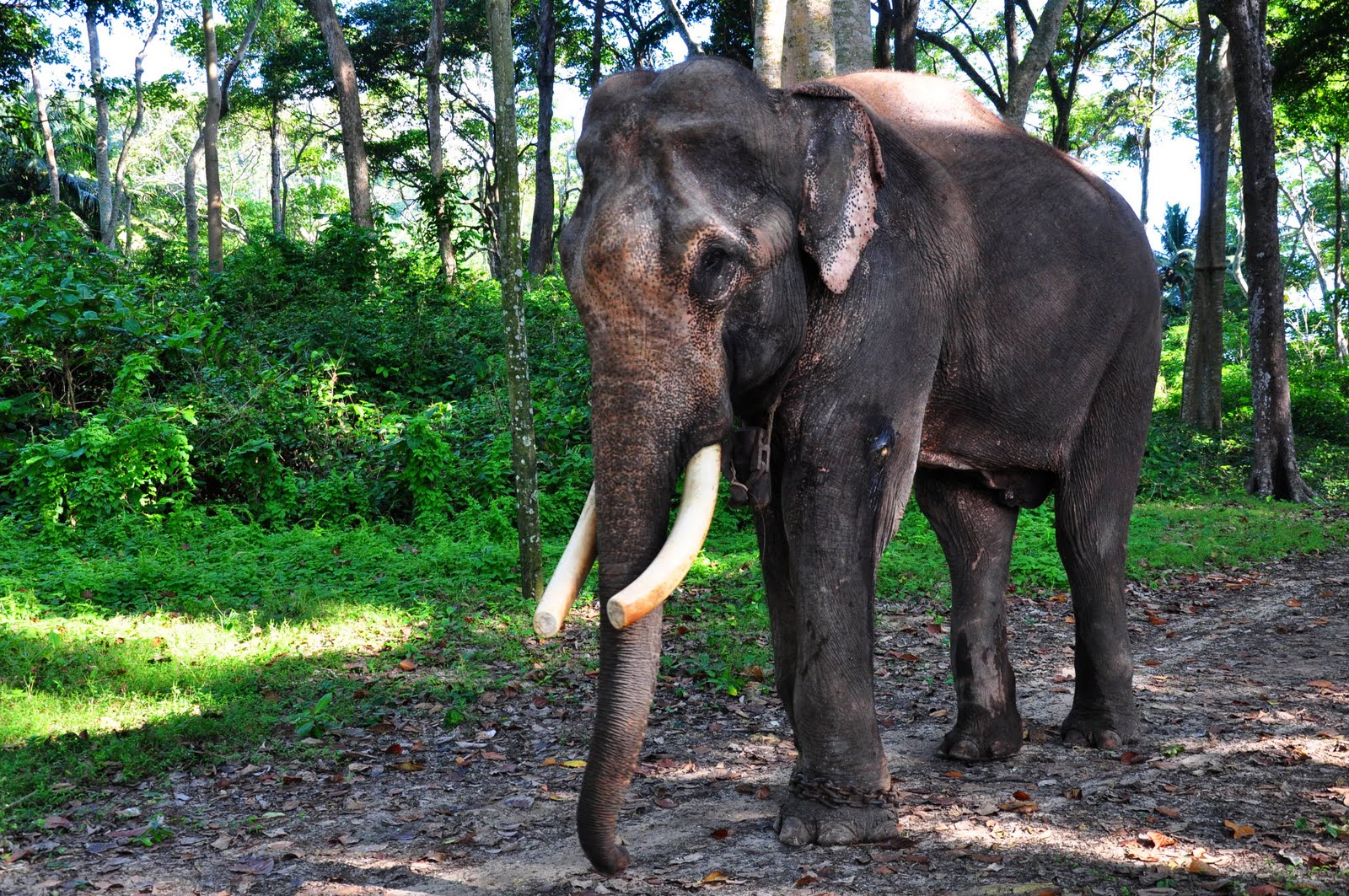
While we were at the restaurant one afternoon, the clonk of a bell cracked the silence. The tingle heralded the arrival of Rajan and all eyes turned in his direction. Rajan, a 60-year-old elephant has made Havelock his home.Adopted by Barefoot, Rajan has become an icon of the resort. He has a long-standing relationship with his mahout with whom he shares an intimate bond. Rajan is taken into the forest during the day and spends the night at the resort. Among other things, that make this gentle giant special is his ability to swim. He loves to wade into the water and paddle in the sea. Visitors can dive and snorkel with Rajan and have their photograph clicked underwater.
Lured by the exciting outdoors offered by Barefoot Adventures, we chalked out a plan for our stay at Havelock. Snorkeling, scuba diving, joy fishing, island camping, finding Rajan in the forest, diving with Rajan, kayaking and hiking in the nearby hills were some of the activities on offer. There are many good spots for snorkeling and scuba diving around Havelock. While scuba diving is for experts, snorkeling is for novices. With no prior experience, scuba diving would have been a tough proposition so we chose to explore the waters of the Andaman Sea with our snorkels.
Aboard a dungi (a small motorboat) loaded with snorkels, fins, tender coconuts and biscuits we headed out to Elephant Beach, the first stop for the day. Elephant Beach seemed like a piece of heaven on earth with boats anchored to the shore and tree stumps flaunting artistic poses against the backdrop of the blue-green sea. Floating on the surface of the water and breathing through the snorkel we marveled at the world that lies beneath. Bold and beautiful corals painted the ocean bed with a riot of colours.The silent orchestra of the depths of the ocean was mind blowing. Schools of fish seemed to be going about their business hastily. I watched in awe, as the fish pranced around the colourful corals gleefully. Humphead parrotfish, clown fish, cleaner wrasse, sea stars were a few that we could identify from the many that crossed our path. We were told that these waters are home to a colossal number of species of fish including exotic ones like manta rays, pacific lionfish, parrotfish and marbled stingrays. South Button, Aquarium, Henry Lawrence, Inglis and Lighthouse are other good spots to feel the pulse of the sea and explore life under the surface of the water.
Walking along the beaches at Havelock is an out of the ordinary experience. Shells of myriad colours and shapes strewn on the sliver-white sand invariably have live creatures inside. The intricate sand art created by crabs is intriguing. These beaches are throbbing with life, quite literally. The water sparkles like a million gems as the sun hovers over its expanse, the waves dance to the tunes of the wind, the shade of the trees on the beach is inviting. Slow and laid back, these beautiful beaches are perfect for those who like to escape into the beauty of nature and the bliss of serenity.
We rented a scooter and hit the tarmac to explore Havelock Island. Riding along the shoreline we stopped at beaches along the way. The play of light and the colours of the water were a sight to behold. Starting from Radhanagar Beach we traversed the entire island on our bike reaching the Kalapathar Beach on the other side. Although we were assured that Havelock is very safe even at night, it got a bit spooky as we made our way back with the headlights piercing the darkness. There were no signs of people for miles on end. Braving the chilly wind and creatures calling out from the bushes we reached the resort.
Intensive logging has thinned down this densely wooded island. The residents are migrants from the mainland and visitors are tourists from India and abroad. Boats trickle into the jetty ferrying people and almost everything else that is used on the island. Newspapers are brought in all the way from Kolkatta every day. On the island are seven villages, splendid beaches and fields of areca, coconut, paddy and banana. Village 1 has the boat jetty and carries a trail of litter left behind by the large number of tourists who visit Havelock. Village 3(Govindnagar) has the market place and is abuzz with activity. This is where the locals buy commodities that are brought in from the mainland. Colourful Indian artifacts, shells and local handicrafts on display in roadside shops make a walk down the bazaar an interesting one. Village 5 has a string of resorts, restaurants and cafes lining the beach. Village 7(Radhanagar), located towards the northwest of Havelock is an ocean of calm. The Time Magazine voted the Radhanagar Beach as the best beach in Asia in 2004.
Crystal clear waters, sun soaked beaches and strips of silvery sand draw beach buffs to Havelock. Spectacular coral reefs and colourful fish that dart underwater make this a great spot for snorkeling and scuba diving. Hills overlooking the sea and mangroves bordering rivulets add variety to the landscape. Be it walking along the beach, diving into the sea or just devouring delicious food, Havelock presents a slice of adventure, tossed in bright sunshine and garnished with a cool blue of the ocean.

Quick Facts:

Getting There: Port Blair is connected to Chennai and Kolkatta by air and sea. Ferrys ply between Port Blair and Havelock. Ensure that the flight timings and ferry timings to Havelock Island are well co-coordinated. Scooters are the best way of getting around Havelock. Carry your driving license.

Season: The weather is warm and oppressive for most part of the year. It is relatively cool in the peak season lasting from December to January. Avoid a visit to the Andamans from May through September.

Tariff: The tariff of cottages and villas range from Rs 6500/- to Rs 9000/-
For reservations contact,
Central Reservations
Barefoot Group, B-4, RM Towers
No. 108, Chamiers Road
Chennai -600018
Ph +91-9003115483, +91-44-24341001

For more information log on to http://www.barefootindia.com/


This article was published in The Hindu on the 20th of Jun 2010. Below is the link to the online version of the article.
http://www.hindu.com/mag/2010/06/20/stories/2010062050320800.htm